
Episode 63
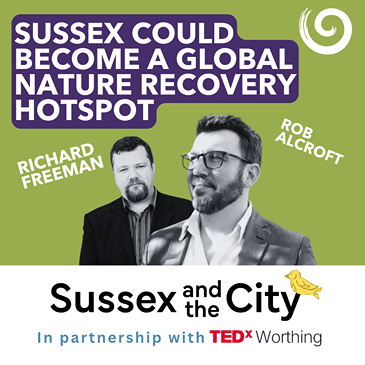
Sussex Could Become A Global Nature Recovery HotspotHost: Richard Freeman Guest: Rob Alcroft – co-founder of Wayforward
🔍 Episode summaryThis is a conversation we recorded more than a year ago. Oddly, it feels more relevant now than it did then.
Back in July 2025, Sussex devolution was still largely something we talked about in the future tense. One of the questions Rob Alcroft and I wrestled with was whether a new strategic authority – and eventually a mayor – would see nature as something sitting off to the side of the growth agenda, or whether it might become part of our definition of prosperity itself.
Quite a lot has happened since.
Over the summer, climate action conveners Cat Fisher, Victoria Ramsden, Cathy Shutt and Paul Steedman brought together people from businesses, community organisations, academia and environmental networks from across Sussex to challenge the emerging Sussex and Brighton Strategic Authority's definition of prosperity.
Their argument was that prosperity shouldn't mean economic growth alone. It should mean people, the economy and nature thriving together.
An open letter making that case attracted 213 signatures from a wide range of organisations and individuals. And the language now being used in briefings on the emerging strategy describes prosperity as a Sussex where people, place, the economy and nature are resilient and thrive together, now and in the future. Climate resilience has also been described as one of the strategy's priorities.
We're not suggesting one letter magically rewrote regional policy. It didn't. But it is a useful example of why these conversations matter while new institutions are still taking shape – and what can happen when people make a clear and practical case for doing something differently.
Which brings us back to Rob.
Rob is co-founder of Wayforward, a social-purpose strategic consultancy specialising in stakeholder engagement. The organisation has been deeply involved in nature recovery across Sussex, including helping shape the original vision for Sussex Bay and leading engagement around the Local Nature Recovery Strategies for East Sussex, West Sussex and Brighton & Hove.
That work has given Rob a broad view of what's already happening.
And there is a lot happening.
Through its research, Wayforward has spoken to more than 200 people across well over 100 organisations and identified more than 50 pioneering nature recovery projects in Sussex.
The finding isn't a lack of enthusiasm or expertise.
It's that people overwhelmingly want to collaborate more, but often lack the time, coordination and infrastructure to do it.
The opportunity for devolution, then, might not be for a new mayor to invent another layer of environmental activity. It might simply be to give a bigger voice, greater coordination and more confidence to what is already here.
Sussex is incredibly green.
We have the South Downs. The sea. Rivers, chalk landscapes, woodland, farmland and important habitats. For most of us, some kind of extraordinary landscape is never very far away.
And that makes it easy to assume nature is doing rather better than it actually is.
Rob points to research around the River Adur where around two-thirds of surveyed river users believed it to be in good or very good condition, despite evidence of its environmental problems. The landscapes around us can look beautiful while biodiversity declines, waterways deteriorate and water resources come under increasing pressure.
Sussex is going to build houses. It will need infrastructure. Political leaders will want investment, jobs, transport projects and visible evidence of economic progress.
Rob's argument isn't that nature recovery should become a reason to pretend none of that can happen; it's that this is the wrong binary.
Development can have environmental costs while also creating opportunities for nature recovery. Nature recovery itself can support jobs, tourism, science, research, health and wellbeing. Walking, cycling, food, wine, culture and the visitor economy can all connect to the landscapes and seascapes Sussex is trying to recover.
Projects including Sussex Bay, Weald to Waves, the work of Sussex Wildlife Trust and other nature recovery programmes are already demonstrating pieces of that story.
Put those things together, give them a much bigger political voice and Rob believes Sussex could become something genuinely distinctive as a global hotspot for nature recovery, research and sustainable tourism.
---
This episode is brought to you in partnership with TEDx Worthing, returning to Worthing Pavilion Theatre on 5 October. This year's theme is We Begin Here, exploring how local change starts and what each of us can do to be part of it, with talks, performances and interactive installations bringing more than 700 people together. Sussex and the City listeners can save 20% on tickets using the code SUSSEXCITY20. Visit www.tedxworthing.com
🎯 In this episode-
Why this conversation, recorded in July 2025, feels even more relevant now
-
How the definition of prosperity emerging in Sussex has changed
-
What Wayforward does and how Rob became involved in nature recovery
-
The origins of Sussex Bay
-
What Sussex's Local Nature Recovery Strategies are trying to achieve
-
What Rob learned from talking to more than 200 people across over 100 organisations
-
The extraordinary number of nature recovery projects already operating in Sussex
-
Why enthusiasm for collaboration isn't the same as having capacity to collaborate
-
The need for "leading from the middle" rather than another umbrella organisation
-
Whether nature needs to be explicitly written into a future mayor's targets
-
What we actually mean when we talk about "nature recovery"
-
Why access to nature matters for health, creativity and community wellbeing
-
Whether Sussex takes its natural environment for granted
-
The gap between how healthy nature looks and what the evidence tells us
-
Why growth versus nature is the wrong argument
-
How development and infrastructure could coexist with nature recovery
-
The economic potential of ecotourism
-
Sussex's opportunities around walking, cycling, diving and watersports
-
How nature recovery can connect with arts, culture, food, wine and health
-
Why a future mayor's voice could make a significant difference
-
Whether Sussex could become internationally recognised for nature recovery
👤 About Rob Alcroft
Rob Alcroft is co-founder of Wayforward, a social-purpose strategic consultancy working with organisations seeking to create social and environmental impact.
Rob's background is in the charity sector and fundraising. Way Forward combines that experience with expertise in communications and marketing, with a particular focus on stakeholder and public engagement – understanding how organisations can build meaningful involvement around their work.
Wayforward's nature recovery work in Sussex has included helping develop the original vision for Sussex Bay and leading engagement for the Local Nature Recovery Strategies across East Sussex, West Sussex and Brighton & Hove.
The organisation has also worked with Sussex Wildlife Trust, Weald to Waves and the Ouse & Adur Rivers Trust, giving Rob and the team extensive experience of the people, organisations and projects involved in nature recovery across Sussex.
🎧 Production creditsHost: Richard Freeman Guest: Rob Alcroft Sound design, editing and original music: Chris Thorpe-Tracey Production management: Letitia McConalogue
📣 Get involved👉 sussexandthecity.info — episodes, resources, events and more about devolution and change across Sussex
👉 sussexintelligence.com — independent research and evidence-led insight into growth, infrastructure, governance and belonging across Sussex