
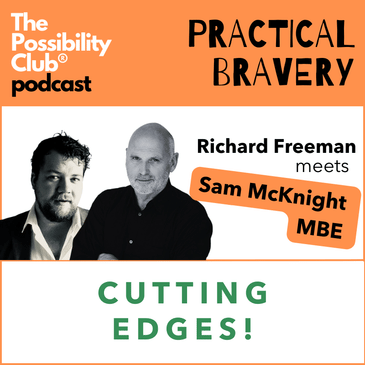

The Possibility Club podcast: Practical Bravery - CUTTING EDGES!
In this episode we dive into the textured world of style AND substance, where creativity meets a profound sense of purpose. How do our expressions of style reflect broader cultural, economic, and personal shifts? How does the aesthetic we choose broadcast our identities and our values to the world?
This episode takes us on a journey through the life and legacy of a creative industries pioneer who's been shaping the public personas of icons across the globe with nothing but a pair of scissors and a flair for transformation.
From working class boy with a Bowie obssession to the style sculptor of Princess Diana, Lady Gaga, Kate Moss at their most iconic. What does social mobility look like at the very top of high fashion? And what is it like to move from creating the faces behind brands, to becoming one yourself?
This is The Possibility Club, and our special guest is the hairdresser's hairdresser, Sam McKnight MBE.
---
One of the most important image makers of the late 20th and early 21st century
— New York Times on Sam McKnight
"What I know is, people want their hair to look good. Having your hair looking good is an incredible mood booster. It's a simple, relatively inexpensive way of making yourself feel better."
Hair By Sam McKnight website
"We said from the beginning we want to bring some joy into the hair care world, which we have done. And I get lots of joy from that in return."
Sam McKnight via Wikipedia
https://en.wikipedia.org/wiki/Sam_McKnight
"That generation of the sixties is when social mobility became possible, really."
Sam McKnight via Gagapedia (the Lady Gaga wiki)
https://ladygaga.fandom.com/wiki/Sam_McKnight
Sam McKnight on X and Instagram — @sammcknight1
"When David Bowie exploded in colour, that was the start of it for me."
David Bowie on Top Of The Pops, 1972, via YouTube
https://www.youtube.com/watch?v=oOKWF3IHu0I
"My friends had a hairdressing salon. I took a Saturday job there and then very quickly I'd left teacher training college and started training as a hairdresser. I didn't want to be a teacher."
"I've always taken risks and that goes back to being a teenager. I like to think that I've carried that through to my sixties. I've always been a risk taker."
David Bailey, photographer, via Wikipedia
https://en.wikipedia.org/wiki/David_Bailey
Twiggy (Dame Leslie Lawson), via Wikipedia
https://en.wikipedia.org/wiki/Twiggy
"It was pretty brave, to leave a secure job in the salon in Molton Brown, the best salon in London — before it was hand-wash it was the top London salon, in South Bolton Street — it was the shit, it was the place to be, and I left that in 1980 to be by myself, doing this thing called 'photo shoots' and two years later I was in New York working for American Vogue."
Vogue (UK site)
Molton Brown via Wikipedia
https://en.wikipedia.org/wiki/Molton_Brown
"There are much more opportunities now but there are much more people going after those opportunities."
"There needs to be a revaluation put on the values of what we bring. You have to train for years to be a good hairdresser. You can't just turn up with a hairdryer."
'Hair by Sam McKnight' 2016 retrospective exhibition at Somerset House
https://www.somersethouse.org.uk/whats-on/hair-sam-mcknight
"The exhibition gave me power in myself that I hadn't really tapped into before. To see it all in front of me, all the people I'd met."
"The creative industries are very attached to emotions. Not only does music, fashion and beauty bring in billions to this country, which is not recognised properly, but they reach people's emotions. Your music, your makeup, your clothes, it sparks people's emotions. When you're working with people on a photoshoot, you're touching them."
"Usually I'm meeting people when they're very young and forming themselves. You build very, very strong bonds with people and there's a huge emotion attached to it. It's a very special relationship."
Kate Moss via Wikipedia
https://en.wikipedia.org/wiki/Kate_Moss
"She doesn't turn out of bed as 'Kate Moss' at six o'clock in the morning, there's a whole process of becoming Kate Moss, becoming Princess Di, becoming Lady Gaga."
Hair By Sam McKnight — the book, via Amazon
"I listened to Coldplay on the radio a couple of years ago now, it was touted as the first sustainable tour and Chris Martin was amazing, he was saying, look we're a fifty piece troupe that's going on big jets all over America, we're not sustainable. But we are thinking about it, and we're doing everything we can in the small ways to have less of a footprint. And I thought, that is really inspiring because it's hard!"
"Now this is where the Internet is really incredible and positive, is people doing their own hair and posting the videos. There was a couple of decades when kids weren't really doing much with their hair — and that's completely and utterly changed. And I find that really inspiring, I love that the Internet has made that possible."
"I'm a great collaborator but in the end it's instinctive as well and I need to be happy with it."
"I don't really have to please anyone but myself."
------
This episode was recorded in March 2024
Interviewer: Richard Freeman for always possible
Editor: CJ Thorpe-Tracey for Lo Fi Arts
For more visit www.alwayspossible.co.uk
[00:00:00] This podcast is brought to you by AlwaysPossible
[00:00:04] AlwaysPossible.co.uk
[00:00:13] My ok, listen up folks time for a new addition of the Possibility Club, what a treat
[00:00:18] And in today's podcast we're going to be diving into the textured world of style and substance
[00:00:23] Where creativity meets a profound sense of purpose
[00:00:28] How do our expressions of style reflect broader cultural, economic and personal shifts
[00:00:33] How does the aesthetic we choose, broad cast and identities and our values to the world?
[00:00:39] In this episode we go on a little journey to the life and legacy of a pioneer who's been shaping the public personas of icons across the globe
[00:00:48] With nothing that appears as is, and I've flair for transformation
[00:00:52] From the smoky backstage of high-op-tamed fashion shows to the glossy pages of Vogue
[00:00:57] My special guest, this episode has navigated the ever evolving landscapes of beauty and celebrity
[00:01:03] Beyond the glitter there's a deeper dialogue about the influence of aesthetics and our sense of self and society
[00:01:10] How does what we see in the mirror reflect our cultural zeitgeist?
[00:01:14] What can the evolution of style tell us about the shifting social values and the ongoing dialogue between tradition and rebellion?
[00:01:22] Imagine a world where every curl, hue, cut tells us story not just a personal style
[00:01:28] But of social, political transformation, of social mobility, of economic journey and of technological advancement
[00:01:36] How does my guest view the interplay between the personal and the political when it comes to fashion?
[00:01:42] And how has the fashion industry adapted to the demands of sustainability, a digital transformation?
[00:01:48] And exploring this, I'm not just untangling a personal history but also a bit of cultural analysis
[00:01:53] We'll discuss the intimacy of how the styling chair can sometimes turn into a confessional
[00:01:58] A strategic planning session which is playing therapy
[00:02:02] Revealing the trust and transformative power vested in the hands of those who sculpt our external selves
[00:02:10] I'm Richard Freeman, this is the possibility club
[00:02:13] And my special guest is responsible for iconic looks of Princess Diana, Lady Gaga, Kate Moss
[00:02:20] And is the only hair stylist in history to have had a retrospective of their work and their influence on society at Summer Set House in London
[00:02:30] It's an extraordinary privilege to introduce you to Sam McNeight, MBE
[00:02:40] Welcome to the possibility club, I'm your host Richard Freeman, as always delighted to have your ears for half an hour
[00:02:47] Thank you for lending them and as always we're looking at themes of bravery and leadership
[00:02:53] An impact in business, in culture, in society, and I've got an extraordinary guest
[00:02:59] And who I'm delighted to be talking with in this episode
[00:03:02] The hair stylist, hair stylist, the list of clients is extraordinary, I'm also all delve into that
[00:03:08] But actually really what I'm interested in is it's as role as an entrepreneur
[00:03:13] As someone who's kind of navigating the world of business and style to create products and services that move and inspire
[00:03:22] And let's explore all of that so Sam McNeight, MBE, how do they do you?
[00:03:26] I do, well thank you, how are you?
[00:03:28] I'm very well thank you. Where did it all start? Why and when was here?
[00:03:33] Something that you thought could be a calling?
[00:03:36] When I saw David Bowie on top of the past, in I guess it must have been, you know, early 70s
[00:03:43] Yes, in as I saw David Bowie, I was hooked and I was hooked to fashion, I guess, and style
[00:03:50] Followed him and his haircuts through the decades
[00:03:53] Because I was, I'm from a coal mining village in Southwest Scotland
[00:03:57] So my dad was a coal mining and my mum worked in the coal up
[00:04:00] It was like 60s, early 70s and I'd been brought up with the Beatles and the violent stones
[00:04:06] And all that kind of 60s stuff but you didn't really feel that if you were in those
[00:04:11] I mean they say that they're only 200 people in the swing mistakes
[00:04:15] It's London, don't know, yeah, there's probably true
[00:04:18] But we saw it all on Terry and listen to it on the radio
[00:04:22] And when David Bowie exploded in colour, that was a start of it for me
[00:04:26] But I was at teacher training college in 73
[00:04:30] I was very into glam rock, I mean I had poems and all kinds of stuff in my hair
[00:04:36] And my friend's owned a hairdress in selling, we didn't have any money so I was a window cleaner
[00:04:41] I worked at the jeans factory, I worked in a soft factory
[00:04:44] Yeah, they're a pocket money, you know
[00:04:46] And I worked at teacher training college in 73
[00:04:49] And I think I lasted two years and I absolutely hated it
[00:04:53] I hated not earning money and also I didn't like the, that I was still in education
[00:04:59] I didn't really want to be a teacher
[00:05:01] And weirdly my friends had a hairdress in salon
[00:05:04] And I took a Saturday job there and then very quickly I had left college and started to train with a hairdresser
[00:05:13] Puppies later moved to London and ended up working in one of the top salons
[00:05:18] End of working for the shooting provoke
[00:05:20] Very early on actually 15 years ago very soon
[00:05:24] At that time it was a very big risk but I left the salon and decided I only wanted to do photo shoots
[00:05:32] Now not very many people did that back then because the industry was very, very, very tiny
[00:05:38] It wasn't like it is now
[00:05:40] And I remember, or everyone saying you are crazy, you will never make them and you money do that
[00:05:46] And I didn't for a while but I was willing to take the risk and I think for me
[00:05:51] I've always taken risks and that goes back to from being a teenager
[00:05:55] I'd like to think I have carried that through into my 60s
[00:06:00] You know, I've always been a risk taker
[00:06:02] I don't think that came from you've set out this extraordinary story of social mobility
[00:06:07] Really, you know somebody from a background that's quite far removed from
[00:06:12] Vogue photo shoots to carving your way through that
[00:06:17] Taking those opportunities and kind of betting on yourself I guess
[00:06:21] Is that something intrinsic in you or it probably comes with my background
[00:06:24] Don't forget that generation of the 60s
[00:06:27] Was when social mobility became possible really
[00:06:32] When you look at the history and the story of some like David Bailey
[00:06:35] of Togafra, David is an East End Boy who ended up shooting
[00:06:40] Entry this world of here we tell you in self-poshcards and very upper class
[00:06:46] But Togafra was and he was the Renegade and I think you look at something like that
[00:06:52] And you think it's a design guy, isn't it?
[00:06:54] People like that make things possible
[00:06:56] Not that it had never happened before but it almost
[00:06:59] And Twigie and those kind of people before me
[00:07:03] Open doors and I think in my time it didn't feel like you said something
[00:07:08] That carving your way through it didn't feel like that to me
[00:07:11] It felt like I wanted to do this and I'm going to give it a go
[00:07:15] It was more opportunistic it was more about seeing an opportunity
[00:07:20] And seeing something that I really liked doing and thinking
[00:07:26] Oh, I wouldn't mind trying to make a career of that
[00:07:29] It was pretty brave to leave a very secure job in the salon at Malton Brown
[00:07:34] The best salon in London before it was hand wash
[00:07:37] It was with the top London salon
[00:07:39] It was a South Maulustry and when it was
[00:07:41] It was the shit it was the place to be
[00:07:44] And I left that in 1980 and to be by myself
[00:07:48] Just doing this thing called Photoshop Shoot Switch
[00:07:50] They weren't very many and two years later I was in New York working for American Boats
[00:07:56] So it's about grasping those opportunities
[00:07:59] I'm a bit of a chance although it's so yeah I think wrong with that
[00:08:03] But in terms of that you talked about that kind of legacy or certainly kind of measuring that success
[00:08:08] You hope that's open the doors to yeah others
[00:08:11] I mean what are your reflections on the ability or capability of people like you were then
[00:08:17] To be able to do that now? Do you think it's harder?
[00:08:21] I think it was easier for a while
[00:08:23] But I think this side of the business has exploded so much because of social media
[00:08:30] There's much more competition there are thousands and thousands of people now
[00:08:35] Whereas before when I started there was probably 10 maximum
[00:08:39] Then in the late 80s early 90s there were more
[00:08:43] And it became a thing and there were more magazines there were more photos
[00:08:47] Or a fashion show that became a thing which weren't before so of course the business grew
[00:08:51] But I guess in the last 10 years or so it's not just grown
[00:08:56] It's exploded because when you're on a shoot now
[00:08:59] Whereas before you used to do shoot you do you know you've just kind of weak doing ten pictures
[00:09:05] Now you do 30 pictures in the day you know so and there's there's just so many more demands
[00:09:15] People try to get away with pain less money is it's changed a lot
[00:09:20] I have got to be in my body about that in the moment because it's gone so big and so
[00:09:26] It's exploded so quickly but it's no in what I do in the fashion industry
[00:09:30] There is no there are no regulations and no boundaries for her and make up people
[00:09:35] There's no protection like there isn't the movie business
[00:09:40] So basically people can take the piss and they do you know so I think that needs to change
[00:09:47] Because because of the explosion I think it is harder
[00:09:51] So I'll track the attention that would be heard above all the noise and be seen for you work to be seen above all the noise
[00:09:58] It is definitely there's so many more ways of doing it now
[00:10:02] There are much more opportunities now but there are much more people going after those opportunities
[00:10:09] Do you think your industry still kind of favors the brave does it still like originality and those that kind of cut through
[00:10:15] Or is it it has been ever kind of raised to the bottom, you know they want the cheapest there's definitely a bit above there's definitely
[00:10:22] Originally still sort after that so is cheap and or free and there's a kind of it that an
[00:10:32] Recovery calibration of the values put on what we bring and this is not putting down makeup artists
[00:10:38] But you have to train for years to be a hairdresser whereas people can go online and say there are makeup artists with that any training at all
[00:10:48] And I'm not saying everyone does that but it's a little more complex and I think that's not taking some into consideration a lot
[00:10:58] You know, did you know anyone can call themselves an accountant there's no there's not even a professional
[00:11:04] Wow that's amazing. That is amazing. Yeah, I mean there are obviously you could train to be an accountant but yeah
[00:11:10] But there's no legal yeah, if you call yourself what actually to understand and do her really well
[00:11:17] You need the experience of you can't just turn up with a hairdryer
[00:11:22] You really need to you need it to have a flamethrower and the experience of working it with your hands and feeling it because it's a very alien material
[00:11:32] If you want to manipulate it, you know, then there's the whole client headrest of relationship which is you know parts psychologists
[00:11:41] And that's that's chikyton negotiation so there's a lot to be said for experience
[00:11:46] But it's not just happy, but you see across the board of journalists or the same I know lots of my friend are journalists and
[00:11:53] You know they're expected to work for free. There are experience and what they brings the table isn't value like it used to be
[00:12:01] And generally so it's it's definitely about times what I hear about in my absolute detester
[00:12:08] I hear kind of it's just a hair and makeup, you know, although only be an hour
[00:12:14] And then that kind of they walk well how long are you going to tell
[00:12:17] Sometimes it takes a long time and it's said in a kind of I kind of flippant kind of way
[00:12:25] I even heard someone the other day turn up some of the assistant
[00:12:29] I want just a hairdresser that never referred to yourself as just the anything
[00:12:34] If you're going to not respect and you're not going to have that respective value for yourself and what you do
[00:12:40] We do have that strangely embedded, I think in a lot of particularly kind of UK culture about you know which jobs have value which don't which are worth
[00:12:49] And you know the pandemic sort of highlighted some of that in quite stark relief but you're right it's across the it's across every sector
[00:12:57] You are synonymous with styling Princess Diana Lady Gaga and people who who were on the the world state some of the most famous people in the world at the time that they were the most famous
[00:13:08] And and obviously their hair is part of them, you know big part of their identity
[00:13:13] When you measure your success your kind of personal success is it in the kind of process of creating that design your relationship with those people or is it actually at the end when you kind of step back and see just how much what you created is now part of mythology
[00:13:30] It's now part of a kind of an era defining visual
[00:13:34] I think it is exactly what you just said about seven years ago I was asked invited by Samasa House to do quite a big exhibition
[00:13:45] But the hair exhibition was never really been done before and so we did a book at the same time of my work of sort of 40 years where 50 now
[00:13:56] And going through I think we went through about 40,000 images which I'd never looked at before they were all in plastic boxes and the story unit you know
[00:14:05] And I was forced to kind of do a bit of this as your life and say I've got to go before my eyes and it was an amazing experience. It was quite powerful and it really it really was powerful it gave me power in myself
[00:14:24] That I hadn't really tapped into before because I looked at them and was very happy with it in every way
[00:14:31] I had met the most incredible people and that's the thing I take away from it most
[00:14:37] I've met the most wonderful people from you know singers and actresses and incredible iconic photographers like have it on hand
[00:14:48] And that night, reverse it emotionally and get to work with amazing designers like Carl Agraffel not designers
[00:14:56] By cons and phenomenons like Carl Agraffel Vivian was from Driesman, no to the list is endless and to see all that in front of me and the people that I have met
[00:15:08] And it was quite emotional because you form bonds with people very, very quickly so very the creative industries are very attached to emotions
[00:15:18] Not only did it, there's music, fashion and beauty bring in billions to this country which is not recognized properly
[00:15:26] They reach people's emotions and you music and you make up whatever your clothes it sparks an emotion people
[00:15:33] And when you're working with people on a photo shoot you're touching them
[00:15:45] What cast is brought to you by always possible but who are we?
[00:15:49] Always possible works with ambitious businesses, charities and public services that are thinking about what's next
[00:15:56] From architects to aerospace companies, puppet theaters to primary schools, business networks to big data analysts
[00:16:02] If you're wanting to be brave with some big decisions or to be clearer about what to prioritize
[00:16:07] Then an award-winning workshop from the always possible team is a brilliant starting point
[00:16:12] We care about just one thing building ideas that work
[00:16:16] For creative intuitive and practical expertise, consider always possible as your strategic partner
[00:16:23] Find out more about how we could power up your mission because it's always possible.co.uk
[00:16:31] Always possible.co.uk
[00:16:37] This is a quick note to say that the Brighton Paradox will be back
[00:16:47] Season 2 will be a shorter tighter series looking at the energy, impatience and opportunity happening in post-pandemic Brighton and Hove
[00:16:55] We're examining the landscape across the city in 2024
[00:17:00] What's changing? What's building an economics culture, community and technology
[00:17:05] Why are people telling me that they are in fight or flight mode?
[00:17:10] What is the significance of a council with an overall majority? How is artificial intelligence
[00:17:14] Maybe changing the way people solve problems in the city?
[00:17:17] And of course, how has a podcast changed the lives of Brighton's children?
[00:17:23] And it's not this one. All new interviews and all new explorations of the city
[00:17:30] But right now we're still gluing the jigsaw together so you'll have to wait a little bit longer
[00:17:35] But we aren't delighted to announce that we're being supported again by Brighton Hove, Albe and Football Club
[00:17:40] Who return as brilliant headline sponsors and partners
[00:17:43] And the University of Brighton's helped grow management program also returns as a really valuable project partner
[00:17:49] And in addition, we have two new supporters, the exceptional folk at EQ investors
[00:17:55] And the legends at midnight communications and we couldn't do this without all of these visionary people
[00:18:00] Brilliant. Thank you. Take care.
[00:18:04] So going through these images, some people passed away, some people you had seen for 30 years
[00:18:13] But I was forced to contact a lot of those people to get their permission for the office of the ones that passed away
[00:18:19] I didn't go to medium but I was forced to go and touch with people
[00:18:24] Do you know what? That's part of the reason I love social media so much as that side of it is just amazing to be in touch with
[00:18:32] I don't know models or makeup artist that you you hadn't seen for 30 years
[00:18:36] It's something they've got grandchildren and you know, you're not going to be going out to dinner with them the next night
[00:18:42] But there's a contact there because there was an emotional bomb
[00:18:46] Because usually I'm meeting people when they're very young and forming themselves
[00:18:51] You know, and with Gargoye working for the two years at the very beginning
[00:18:55] I mean, I had to see no few years back working with people like that and Kate Moss and Diana in very formative years
[00:19:02] You build very, very strong bonds with people so there's a huge emotion that's actually
[00:19:09] But you must really understand then what those people are going through at that point, you know that
[00:19:14] Yeah, empathy and that and that being able to read where they're at because I'm sure they're terrified
[00:19:19] You know if they're putting up your hands literally that that must be a real skill
[00:19:23] Well, it's it's about listening as the two ways to I mean they can listen to me mowing for a couple of hours as well
[00:19:29] So and but it's definitely about reading and absorbing and understanding
[00:19:35] It's a very special relationship. I mean there were we were on a shoot once a few years ago when someone from the client
[00:19:42] I can't remember who was who came on the shoot and really being on a photo shoot before we had Kate Moss
[00:19:48] And I think we're a couple of hours repair and they come you know six clock in the morning
[00:19:53] And this person has grown oh my god how long does it take and hasn't she doesn't turn out that as Kate Moss
[00:20:03] It's six o'clock in the morning. There's a whole process of becoming Kate Moss becoming Princess on becoming Lady Gaga
[00:20:12] The person who drops at bed at that time, you want it. Isn't the one you see on the cover of the magazine?
[00:20:17] It's it's it's character building it's going to be who is she today is she going to be Brigitte Vardo today is she going to she wearing a tiara today
[00:20:25] What's the dress that and should we try on six dresses?
[00:20:28] It's a couple of hours of transforming and I guess we all do that to a point even us mere models, you know, they're still we do live a certain day
[00:20:36] Yeah, yeah, yeah, yeah, yeah, yeah, yeah, I'm going to be today. How am I going to show you?
[00:20:39] Yeah, God I had half an hour decided what color jumper I was going to wear.
[00:20:43] This is this is a orange on the orange.
[00:20:47] But I guess that that brings us to talking about your business here by Sam McKnight.
[00:20:54] Yeah, that 50 years of that's journeying that understanding the you know the successes the mistakes the people trying to distill what would have been your
[00:21:04] time and expertise for sale now into something that kind of captures that that people can use themselves.
[00:21:11] You know, what is it like switching that kind of entrepreneurial brain the one that got you to the upper and echelons of the industry
[00:21:18] To now in something that's selling to consumers, you know, selling to anyone who wants to buy it rather than just to
[00:21:25] The people in your chair for those shoots.
[00:21:28] I haven't you think differently about it is a different kind of learning a different process.
[00:21:33] I can't change on to all to change. I have to adapt though, but I have an amazing team with me now because before there were only ever two of us really kind of me and my bright hand man just sort of
[00:21:45] I was been with me for 26 years is that credit.
[00:21:49] Creatory direct and now it was just service navigating everything as a god busier and busier navigating big teams after the 3040 assistance for a big show 100 models.
[00:21:59] So we needed a team for this week where should we begin?
[00:22:03] I know what I need to get someone's hair looking right and I'm all about easy products that are easy to use
[00:22:13] That are not going to make your hair look like a carpet like you've got to have a product on them.
[00:22:18] They're going to keep your hair looking like hair, they're going to keep your hair real but they're going to work.
[00:22:23] They do what they say on the tin because I've got so fed up with products claiming this and they can do this.
[00:22:29] And there was so many just not doing that and I think these days also social media you can't really do that because you're going to get all that.
[00:22:35] So there was a gap there for honesty integrity and for products it really worked and I was finding when we were working on these 10 years ago.
[00:22:43] There was a trend for everything to start looking very beige and clinical and boring with too much information on those who and I know people really respond to colour.
[00:22:58] When I started in social media and doing the exhibition in the book, I would do loads of talks at summer set house for bus loads of hairdressers who come down from up north and stuff like that.
[00:23:10] So I saw there was an appetite for what I was doing when I was posting hair images on Instagram which I joined at the very beginning.
[00:23:20] I saw there was an appetite for what I was thinking if that makes sense, you know and I'm a great lover of colour.
[00:23:28] There was a lot of colour in the makeup world but there wasn't a lot of colour in the hair world so we've made our products very very simple, very easy to understand.
[00:23:38] It's like in naughty names on summer numbers so there's a bit of humour there but they're very stylish products that look great in someone's handbag or sitting on a shelf and not something you want to hide.
[00:23:49] With absolutely the best ingredients we can find mixing nature with the latest technology and also back then we try to be a absolute sustainerless possible but.
[00:24:04] And then we're going to be a complete sustainability was so expensive. So we went for recycled and recyclable plastic and we're now moving forward into much, much more.
[00:24:14] We have one totally compostable thing in our lunch at the moment and we're looking at more things like that as things become well cheaper to use because 10 years ago if you made it out of total is a sustainable thing.
[00:24:26] The thing would cost over 100 quads so that it just wasn't going to happen. I'm a great believer. I listened to Coldplay and the radio last year maybe a couple years ago now and there it's been touted as a first sustainable tour.
[00:24:39] This Martin was amazing and he was saying, look we are 50 piece true that's going on big jet all over America. We're not sustainable but we are thinking about it and we're doing everything we can in the small ways to have less of a footprint and I thought that was really inspiring because you know it's it's hard you know it's it's hard.
[00:25:04] We know you know values cost money sustainability cost money it's big responsibility for getting that balance right between making it something that's accessible when I know is people want their hair to look good having your hair looking good is an incredible mood booster.
[00:25:21] It's a really easy simple relative expensive way of making just making yourself feel better you know just having your having your hair blow dried or trying a new style or something.
[00:25:34] What we can do now with hair products is quite amazing what you can do in a few minutes with modern hair for us crucially without ruining your hair like he used to.
[00:25:46] He's quite incredible and the technology is moving so fast it's really really interesting what's going on.
[00:25:53] Now this is where the internet is really incredible and positive as people doing their own hair and posted the videos I mean the variety of it is just it's incredible and it's because when I was a kid everyone was into their hair I mean we change our hair every two weeks you know from poems and colors we used to color hair with felt it pens because
[00:26:15] right here colors have been invented yet and I think there was quite a couple of decades there where kids weren't really doing much with their hair.
[00:26:23] And that's completely and utterly changed and I think I find that really inspiring I love that I love that the internet has made that possible.
[00:26:33] And if you found in your own I guess excitement or self worths off understanding in that shift from being a you know a crafts person you know somebody who gets a retrospective as someone's house because of their artistry.
[00:26:47] To now being a brand you know a household brand and a product and a thing that people are playing around within their own homes and I've you know not many people get to be both you know how does that make you feel does that is something quite exciting for you.
[00:27:03] Oh God it's amazing yeah I mean I'll tell you what during COVID I wasn't doing any photoshoot obviously forgotten the good part of year that gave me time.
[00:27:13] You know in my mid 60s to reflect which I really had before because I was like from one continent to the other constantly.
[00:27:22] Pushed the podium that happily as well and I've been consulting for years big big you know companies on their own brands and I'd always said oh God we should do a run thing and during COVID it gave me time to really reflect.
[00:27:36] Home what we're doing and actually finding investment and because we had launched a few products funded by myself a few years before and they were doing quite well but I couldn't afford to take any further because.
[00:27:49] It is very very expensive to launch a hair going so during COVID we managed to find a team or mostly on zoom raising investments and it gave me.
[00:28:03] It gave me the space to separate myself from the future shift in the fashion show world because I would never have had that so I think I may have found that a little.
[00:28:16] Over a while mean to be kind of doing both things same time and it gave me some space and I think this I remember doing an interview with.
[00:28:23] The business of fashion in the first couple weeks of COVID and I was very clear.
[00:28:29] I'm not going to look at this as a negative.
[00:28:32] I'm that kind of person anyway, I'm going to try and get the positive out of this and make the absolute most of it because this is a once-a-lan.
[00:28:40] Lifetime opportunity so I've got again is obviously opportunities in its rather than and listen to my time and my garden as well.
[00:28:52] So hopefully it was almost the catalyst to hurry it along if that makes sense having some space and what I took from that was.
[00:29:01] To constantly give myself a bit of space and not be consumed by that business side we took all the colors of the packaging from flowers in my garden.
[00:29:14] I would just constantly take pictures for months and all the colors came from the garden so I'd quite like the fragrances as well.
[00:29:22] So it's kind of looking around you absorbing what's around you and taking grass and taking from it something that inspires you.
[00:29:33] My final question then you know given this amazing career given this new chapter to it, this clearly working you know people are buying your hair care that they're talking about it.
[00:29:43] The talking about it. It's a it's a we were the most talked about hair brands on social media and press last year and in February this year, which I mean we're a small brand to be involved with those major major multinational.
[00:30:01] It's just it is such a thrill for all of that there's nine or ten people in my team those are there's only us and we're very small budgets.
[00:30:11] We can't even afford to do French but that's another story.
[00:30:15] We put our heart and soul into it and I'm getting so much back from it because the creative side of it is creating those content for social media.
[00:30:26] It's coming up with the packaging the colors you know and the reviews honestly the reviews are just incredible absolutely amazing people are really enjoying them so it's working.
[00:30:39] I mean yeah it's my job in my role is to make people look and feel really good.
[00:30:46] That's what I want to do you know and that's what we seem to be doing and we just want to more awards today which I was really doing today.
[00:30:55] Yeah that's just showing off.
[00:30:58] The gimmick so given all that what are you excited about for the next 50 years you know clearly you've been enjoying I'm really enjoying because for years I've worked for people now I'm working for myself and my team and it's a very different feeling.
[00:31:13] I don't really have to please anyone but myself of course it's always a collaborative effort and on the real for those years of training in collaborations.
[00:31:25] And I'm a great collaborative but in the end it's instinctive as well and I need to be happy with it.
[00:31:33] I'm going to bring some joy into the hair car world which we have done and I get lots of joy from that in return if that makes sense because they're reviews and the positivity we've had and the response to run is just it's been phenomenal.
[00:31:49] I think more of the same but the better time off in the garden and the better time off to travel to places that I've never been before hopefully ASAP a huge launch in America.
[00:31:59] Okay so I'm a good night and be here thank you so much for being on the possibility club.
[00:32:05] Thank you thanks for having me.
[00:32:07] Thank you for listening to the possibility club practical bravery.
[00:32:13] If you enjoyed this episode do like share, review tell everybody about it, look in the show notes for all the details of today's guest stuff we talked about stuff that's of interest new things to read new things to listen to.
[00:32:25] And if you are running a business or a charity and you are trying to accelerate or improve the impact that you have in the world.
[00:32:35] If you want to be famous for what you do and what you change rather than just what you sell, then talk to us always possible.co.uk.
[00:32:44] We want to hear from you we want to talk to you we want to amplify and elevate your ideas and who knows we might be able to help you feel more confident and clear about what's next.
[00:32:55] Always possible.co.uk. We'll be back in a couple of weeks with a new special guest and a new insight on practical bravery in action.
[00:33:05] The possibility club is an always possible podcast. The interviewer was Richard Freeman for always possible and the producer and editor was me, Chris Thorpe Tracy for Low Fight Arts. Have a good week.
[00:33:19] Always possible.co.uk.
[00:33:26] Thanks.