
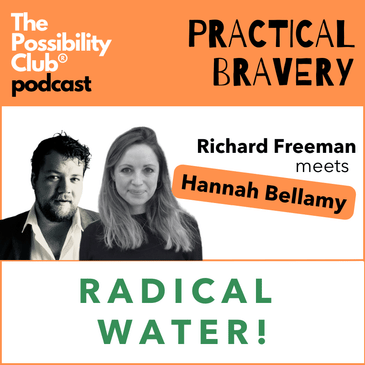
The Possibility Club podcast: Practical Bravery - RADICAL WATER!
How can innovative partnerships transform global health initiatives? What role does transparency play in building trust and driving impact in charitable organisations?
This episode delves into these questions through the lens of global organisation, charity: water.
charity: water, has revolutionised how charities operate and engage with donors. The organisation operates on a 100% model, where all public donations go directly to funding clean water projects, while private donors cover operational costs. This model ensures that every contribution has a direct impact, fostering greater trust and engagement from donors
We ask why, and how this affects the world of fundraising and accountability.
This is The Possibility Club, and our special guest is Director of charity:water UK, Hannah Bellamy.
---
Hannah's page on the Business Charity Awards website
https://www.businesscharityawards.com/hannah-bellamy
Hannah Bellamy via LinkedIn
https://linkedin.com/in/hannahbellamy/
Costa Foundation board and team page
https://www.costafoundation.com/our-team/
United Way books / education charity
"Growing up in the 1990s we thought about businesses like The Body Shop for example, but they were outliers. We didn't necessarily think about other businesses and how they behaved. So it was a whole new world to me, and that's how I got into the charity sector."
charity: water
"We've always had this different model where 100% of funds raised on our website, anyone who gives me £10, whatever it is, that will all be spent within the countries where we're working, and then we will prove that work."
"We put every single project on our website, you can see them, and that holds us to account."
"charity: water founder Scott Harrison was a nightclub promoter for ten years in New York. Lots of drink, drugs, probably a lot of fun but started to be much less fun over time. He decided to give that up and volunteer. Eventually found himself on a hospital ship in Liberia."
Scott Harrison via Wikipedia
https://en.wikipedia.org/wiki/Scott_Harrison_(charity_founder)
"He realised that so many people were coming to emergency hospital with illnesses or other types of situations that came from not having any water where they were living."
"He was talking to people who traditionally don't give to charity. He jokes that he was talking to his drug dealer about giving and he said, well I don't trust charities. So people who perhaps had never trusted or supported charities. He said, I guarantee you, give me your money and one hundred percent will be invested in the project and I will show you."
"It seems huge, it is huge, it's a massive problem but we are making progress. We do know how to fix it — and we can."
"It's one of the few problems in the world that we can all agree on. So we can look at it and say at the extremes, everyone still agrees that every human should have access to clean and safe drinking water."
"If I'm fundraising, I know I'm not fundraising for my salary. It makes it more comfortable. The difficulty is, it's really hard to scale."
Hannah's TEDx Winchester talk
https://www.youtube.com/watch?v=Ca0PspF85QM
"Climate change is actually all about water. It's a drought, it's a flood, it's too much, it's too little."
UN Sustainable Development goals
"It impacts women and girls: when a home and a family don't have clean water, the people having to go and collect water, usually from a dirty source and having to walk a long distance, it's the women and girls."
"If people want to make their maximum impact, what does that look like?"
------
This episode was recorded in April 2024
Interviewer: Richard Freeman for always possible
Editor: CJ Thorpe-Tracey for Lo Fi Arts
For more visit www.alwayspossible.co.uk
[00:00:00] This podcast is brought to you by AlwaysPossible
[00:00:04] AlwaysPossible.co.uk
[00:00:13] The sun is out, spring has sprung
[00:00:15] I'm in your ears for a little bit saying hello
[00:00:18] What a treat, welcome, welcome to the Possibility Club podcast
[00:00:22] I've got a question
[00:00:23] How can innovative partnerships transform global health initiatives
[00:00:28] And what role does transparency play when building trust
[00:00:32] And driving impact in the charity world?
[00:00:35] Today's episode is going to delve into this and other questions
[00:00:38] Through the lens of charity water
[00:00:40] The charity water is known for its transparency and innovative approach
[00:00:44] With a dedicated leadership and some very interesting funding models
[00:00:49] Some say as revolutionised how charities operate and engage with donors
[00:00:54] They operate on what they call a 100% model
[00:00:57] Where all public donations go directly to funding clean water projects
[00:01:01] While it's the private donors that cover operational costs, staffing, infrastructure overhead etc
[00:01:07] This model ensures that every contribution has a direct impact
[00:01:11] Which in turn, maybe, faster as more trust and engagement from donors
[00:01:16] What do you think?
[00:01:17] To my guest today has led the UK Arm of charity water
[00:01:22] For years, as she's led it to remarkable heights
[00:01:25] Focusing on providing clean, safe drinking water to communities in need
[00:01:29] Under her guidance, the organisation has implemented projects
[00:01:32] Benefitting over 15 million people worldwide
[00:01:35] She's pioneered new funding strategies, including subscription giving
[00:01:39] And she's developed partnerships across lots of different sectors
[00:01:42] All focused on addressing global challenges effectively
[00:01:46] Exploring people's attitudes towards charity funding
[00:01:49] My guest emphasises the importance of transparency in operations
[00:01:53] She openly shares how funds are used and the real costs of running a charity
[00:01:58] This isn't to deny that charities do cost money but being more transparent about why and how
[00:02:04] This approach seems not only to build credibility, but also encourage more consistent
[00:02:09] And impactful support from the community
[00:02:12] Additionally, my guest has roles beyond charity water
[00:02:16] Mentoring women through the Femment Board program and advising the good brains for good people initiative
[00:02:22] She also sits on the board for the cost of foundation
[00:02:25] Reflecting her dedication to supporting female leadership in the charity sector
[00:02:30] I'm Richard Freeman, this is the possibility club
[00:02:33] And my special guest this episode is managing director of charity water UK Hannah Bellamy
[00:02:43] Good morning, good afternoon, good evening, welcome to the possibility club
[00:02:46] It's Richard Freeman here with as always
[00:02:49] A far more eloquent intelligent and lively guest who is giving me the great honour of asking
[00:02:58] a few questions and having an interesting chat about their life work and world
[00:03:03] And as ever we're looking at themes of bravery and governance and impact
[00:03:08] And what happens when we roll our sleeves up to tackle an issue head on
[00:03:13] What does that look like? How do we do it sustainably? How do we scale it?
[00:03:16] And I've got no better guest, I think to answer some of those questions than Hannah Bellamy
[00:03:22] Who is managing director of charity water UK
[00:03:26] So big, big global movement but we're going to be talking specifically about the intersectionality
[00:03:32] between women's health and water
[00:03:35] And hopefully we'll shed some light on what happens when we invest in one thing
[00:03:41] And the ripples that might have on so many other things in a global context
[00:03:46] But firstly, before we get into these big, big topics, Hannah, how are you?
[00:03:50] I'm good, thanks Richard, how are you? Did you have a good long weekend?
[00:03:53] I did, yeah, very nice lots of family things
[00:03:57] And the sunshine was here, much to be grateful for
[00:04:02] Indeed, yeah, I know it was good to see it
[00:04:05] So tell me a little bit about your work and what got you into working with charity water
[00:04:11] And where you are at the moment?
[00:04:12] Yeah, of course so I've been with charity water for six years
[00:04:16] So it feels very much a part of my identity at this point
[00:04:19] So some of our really picked that up to think how I got there
[00:04:23] There were two main causes that I, head deeply about
[00:04:28] One of them is around women's issues and equality and what does that look like
[00:04:34] Not just for us in a day, it's basically about it around the world
[00:04:38] As you mentioned, we'll talk about an un sure water, pay a huge vote on that, for women
[00:04:43] And the other one is young children and about
[00:04:48] If and how what does it look like when children are born into circumstances
[00:04:54] And our disadvantage throughout life is purely because of where
[00:04:59] And they were born or the circumstances they were born into
[00:05:01] And that really gets me, so I'm going to go out on that
[00:05:04] Obviously again a huge role in water
[00:05:06] Actually not having access to clean water and sanitation is the leading children
[00:05:10] Undefined, which is just, gets me in the gut every time I'm a parent
[00:05:15] But I've also worked on that in other areas as well, some of my previous role
[00:05:18] Was with you know, just way and there we were looking at getting books to children
[00:05:25] Who didn't have books at home to help boost their vocabulary
[00:05:28] So whatever it is that the child needs to try and give them some kind of level playing
[00:05:33] The others they started life so those are the two things that really get to me
[00:05:36] I worked on a number of different issues throughout my career
[00:05:39] But I didn't actually, I didn't know when I began working or even when I was studying
[00:05:46] But working in charity was an option
[00:05:49] I don't think I don't remember ever considering it
[00:05:52] So I came to it having first work in publishing
[00:05:56] That was my first go at a career, it's difficult
[00:06:00] And it's also not what you imagine in terms of when you love reading
[00:06:04] It's very different when you look at books as a product
[00:06:06] So I went from that and I thought, okay, I'll go work in a corporate environment
[00:06:10] This is a business and books have to profit a lot
[00:06:13] So everything else they're product that's the business and understand that
[00:06:16] So I went to work on a graduate scheme of centricode
[00:06:18] Who owned British gas at the time they also owned the A.A.
[00:06:21] They would want to tell like kind of look to themselves the eccentric services
[00:06:24] I worked with them and within working with them for a few years
[00:06:28] I moved into corporate responsibility
[00:06:30] So I started to think about, again, I just not something I'd ever understood
[00:06:35] I think the night was growing up in the 80s, growing up in the 90s
[00:06:40] We thought about business and the body shop for example
[00:06:44] But they were outliers we didn't necessarily think about other businesses
[00:06:48] And how they behaved and what that should look like
[00:06:50] So it was a whole new world to me
[00:06:52] And that's how I got into the charity sector
[00:06:55] And having worked in that area for a while and meeting some of the charity partners
[00:06:58] You see you've been in the charity water for six years
[00:07:01] I've always thought it as an American organization
[00:07:03] But I know you lead the UK team so tell me a little bit about how it works
[00:07:06] And what the sort of Genesis is and the funding model and all that sort of thing
[00:07:10] Yeah, of course and charity water was founded in the US
[00:07:13] Oh, coming into being story
[00:07:15] So we found Scott Harrison
[00:07:18] Lots of people know his story
[00:07:20] They don't know the name charity water they've heard his story
[00:07:23] So he was a nightclub promoter
[00:07:26] Really living
[00:07:28] What he thought had had the time with his best life
[00:07:30] But perhaps they'd started to write
[00:07:32] And he was the first life in the sense of
[00:07:34] That's a drink drugs
[00:07:36] Probably a lot of fun but started to be in much less
[00:07:38] Fun over time
[00:07:39] So he was a nightclub promoter for ten years in New York
[00:07:41] And he decided to give that up and volunteer
[00:07:45] And eventually found himself on a hospital ship in Liberia
[00:07:50] And what he was there he spent two years
[00:07:53] And he started to appreciate why people were coming to this hospital ship
[00:07:59] And he was the fact that our ship was needed
[00:08:02] At the first of just a few adjustments to looking at different countries
[00:08:06] And how they operate and things are needed
[00:08:08] It's hospital ship and people had walks maybe a month
[00:08:11] And a few days to be seen on this hospital ship
[00:08:14] Then what he started to realize is so many of them were coming
[00:08:18] With illnesses or other types of situations
[00:08:22] That came from not having clean water
[00:08:24] Where they were in their villages
[00:08:26] So he went back to New York and being a nightclub promoter
[00:08:30] Originally and thinking he knew as he threw a party
[00:08:33] Because that's what he had to do
[00:08:35] So he threw a party invited loads of people
[00:08:38] He then told them exactly where their money went
[00:08:41] And I think this is the difference
[00:08:42] So charity water was found with this principle
[00:08:44] But because it's someone who didn't come from the sector
[00:08:46] And so he didn't come from thinking about the existing framework
[00:08:49] Thinking about perhaps the existing government funding or grants
[00:08:52] Or different ways that maybe people within an or proper sector
[00:08:55] Things he thought
[00:08:56] Okay, party money
[00:08:57] Now I need to show you and give you a
[00:08:59] You know in this centre of this department
[00:09:01] Or why is that money gone?
[00:09:02] What's it done
[00:09:03] And he also was talking to people who traditionally
[00:09:06] Emigrude who jokes that he'd spoke to his drug dealer
[00:09:09] About giving to charity and he said,
[00:09:11] I know we're giving to charity
[00:09:12] Don't trust charities or where the money goes
[00:09:14] So people who perhaps had never thought about
[00:09:17] We're frustrated with the loot and charities
[00:09:19] He was starting to talk to them and understand that
[00:09:22] So that's why he said, I give 100% then
[00:09:24] I guarantee you give me your money
[00:09:26] 100% of it will be invested directly in a few more projects
[00:09:30] And I'm going to show it to you
[00:09:32] So from the beginning you took all the money
[00:09:35] He separated out, we used that to build this free water project
[00:09:38] And then he took photos of them
[00:09:40] He sent the GPS coordinates
[00:09:42] He told people how many people he was using them
[00:09:44] Where they were exactly all this type of information
[00:09:46] And we've done that ever since
[00:09:48] So we've always had this very different model
[00:09:51] Where 100% of funds raised on our website
[00:09:54] Anyone who gives me 10% power to whatever it is
[00:09:56] That will all be spent within the countries where we're working
[00:10:00] We won't do the work for ourselves
[00:10:02] We'll invest it in global organisations
[00:10:05] A local people to do the work
[00:10:07] And then we will prove that work
[00:10:08] So it's a very transparent
[00:10:10] We pin every single project on our website
[00:10:13] It's a hundreds of thousands of projects
[00:10:14] On our website you can see them
[00:10:16] And they know that they exist
[00:10:17] And that helps us to account
[00:10:19] To our donors for all sorts of people that we're serving
[00:10:21] This idea of water
[00:10:23] You know the revelation
[00:10:24] You'll found a hard
[00:10:25] But also just how important water is
[00:10:27] Because I don't really have to think about water
[00:10:29] Well I haven't had anything about it
[00:10:30] It comes out of my taps
[00:10:31] It's clean
[00:10:32] I can drink it
[00:10:33] For many many years
[00:10:34] I've just taken it completely forgotten
[00:10:36] It's interesting though
[00:10:38] I think even in the UK in the last few years
[00:10:40] And I think in this election that's coming
[00:10:42] It's a good quality
[00:10:43] For the first time that I can remember
[00:10:45] Is going to be quite a big issue
[00:10:46] Whether it's sewage
[00:10:48] And the sea, whether it's bio systems within rivers
[00:10:51] So my thinking right
[00:10:52] If this is happening in the southeast of England
[00:10:55] And suddenly we're now starting to worry about droughts
[00:10:57] We're starting to worry about floods
[00:10:59] We're starting to worry about the quality of water
[00:11:01] Goodness me what might be happening
[00:11:03] Where there's not anything like the infrastructure
[00:11:06] And the money
[00:11:07] How big a problem do we still have
[00:11:09] To ensure that everybody
[00:11:11] Has access to clean water
[00:11:14] We're only starting now
[00:11:16] Like you said, you actually think about water
[00:11:18] As a resource
[00:11:20] As not just something that is there
[00:11:22] And free flowing
[00:11:24] And actually really starting to think of the value
[00:11:27] That it has
[00:11:28] In the country where we work
[00:11:30] That is well known
[00:11:32] And so we're working in 22 countries right now
[00:11:35] That's not where all of the issues are
[00:11:37] Globally there's 733 million people
[00:11:40] So it's about 1 in 10 people
[00:11:42] Who don't have access to water
[00:11:44] And when you think about something that the tems
[00:11:48] That's where they will be getting water
[00:11:51] So if I didn't have the taps here and everything else
[00:11:54] I actually live by close to the tems
[00:11:56] I would walk there
[00:11:58] I would take my Jerry can
[00:11:59] And I would be getting that water
[00:12:01] And that's what I would be bringing home for my family
[00:12:03] To drink to wash
[00:12:05] Where we're working lots of the sources
[00:12:07] They're getting from they are contaminated
[00:12:09] By human waste
[00:12:10] Also animals will share the water points
[00:12:13] So the problem is the 733 million
[00:12:16] When charity will start that was a billion
[00:12:19] It's a really positive piece of it
[00:12:21] It seems huge
[00:12:22] It is huge
[00:12:23] It's a massive problem
[00:12:25] But we're making progress
[00:12:26] And we can make progress
[00:12:28] We know how to do it
[00:12:29] So I always look at this issue
[00:12:31] And it's one of
[00:12:32] The few problems in the world
[00:12:34] That I think first of all
[00:12:36] We can all agree on
[00:12:38] So we can look at it and say
[00:12:40] But the extremes of anyone
[00:12:42] Everyone still agrees
[00:12:43] That every human should have access to clean
[00:12:45] And say drinking water
[00:12:46] So it's great that it can unite people
[00:12:48] And we know how to fix it
[00:12:50] So we can really rally people as my hope
[00:12:53] So it's a huge problem
[00:12:54] We do know how to fix it
[00:12:56] And we can
[00:12:57] The added
[00:12:59] Complication to any of that
[00:13:01] Just is climate change
[00:13:02] Climate change is actually all about water
[00:13:06] It's a flat, it's too much
[00:13:08] It's too little
[00:13:09] And obviously when there's a drought
[00:13:12] What we need to ensure is that any infrastructure
[00:13:14] Come with stand that
[00:13:16] And it isn't contributing towards it
[00:13:18] It's not the communities and villages
[00:13:20] We're working in how in getting access to water
[00:13:22] That's going to be a water table
[00:13:24] So they're not driving it
[00:13:25] They need to have, but we do need to drill deep enough
[00:13:27] To ensure that they have access to it
[00:13:29] And then the other side of it
[00:13:30] Is during times of large
[00:13:33] You also need to be extremely aware of the infrastructure
[00:13:35] Water
[00:13:36] Because it ever comes and taminated
[00:13:38] If you don't
[00:13:39] There's so many different ways of looking at it
[00:13:41] Thinking about it
[00:13:42] And then we'll start to realise
[00:13:44] The value of water like we said
[00:13:46] But also the complexities
[00:13:47] And the robustness of the systems that you need to fix it
[00:13:50] We can
[00:13:51] And we will make progress
[00:13:52] And actually it's something that we know
[00:13:53] We always say we want to bring clean water
[00:13:55] To every person on the planet within our lifetime
[00:13:58] And we should be able to do that
[00:13:59] Something we can do
[00:14:01] And wouldn't that be amazing
[00:14:03] It surely would
[00:14:04] And you know if we don't get this water situation right
[00:14:07] The consequences are enormous
[00:14:10] Clean water and sanitation has a zone
[00:14:12] We have our own sustainable development goal
[00:14:14] Number six
[00:14:15] Clean water and sanitation pool
[00:14:17] But actually it impacts eight
[00:14:20] Gold
[00:14:21] So if you look at access to clean water
[00:14:24] It impacts, although it impacts poverty
[00:14:28] Inpats education
[00:14:29] Inpats gender actually and the list really goes on
[00:14:32] And it's because it's just such a fundamental need
[00:14:34] And then with women and girls
[00:14:36] The issue is that when at home
[00:14:38] No family don't have clean water
[00:14:40] The majority of the time
[00:14:42] The people having to go and collect water
[00:14:44] Usually from a dirty source
[00:14:46] And having to walk in orbit
[00:14:47] We know long distance
[00:14:49] It's the women and girls
[00:14:51] You know we've met women
[00:14:52] I've traveled some of these communities
[00:14:54] And an easier peer and a vendor
[00:14:55] And talk to them about what this is like
[00:14:58] It's really hard work
[00:15:00] So often if you think you've got quite a thin flip of sun
[00:15:03] So they're then taking usually a gerry can
[00:15:07] Or some other kind of vessel
[00:15:09] A trend to lead to gerry can that you would use to collect petal
[00:15:11] Normally
[00:15:12] And then they're walking
[00:15:14] On
[00:15:15] Not properly designed past
[00:15:17] So you know it's a very uneven
[00:15:18] Very uncomfortable
[00:15:20] Can be very dusty and bright
[00:15:22] And sees and very muddy in other seasons
[00:15:24] In quite a few other distances
[00:15:26] Then bending down this back
[00:15:28] Breaking work to collect the water
[00:15:29] Whether it's from a
[00:15:31] An open source pond
[00:15:33] Or sometimes you're actually digging down
[00:15:35] There are wells but very extremely old wells
[00:15:37] When people are pulling water up
[00:15:38] And it's actually really dangerous
[00:15:40] Because they're not protected and people can fall in
[00:15:42] Collecting that water
[00:15:43] And then taking a home again
[00:15:45] And it's really heavy
[00:15:47] And the piece that I didn't say with this
[00:15:48] Is they usually have a queue
[00:15:50] Even to access these things
[00:15:51] They spend a huge amount of time waiting
[00:15:53] And they just get the water
[00:16:02] This is an always possible podcast
[00:16:04] But making podcasts is really only one way
[00:16:06] Which we help people drive forward
[00:16:08] Economic development and social innovation
[00:16:10] We're such a big sport and bread
[00:16:12] But work across the UK
[00:16:13] And sometimes further
[00:16:14] To design and deliver big projects
[00:16:16] Projects that promote social mobility
[00:16:18] Digital transformation
[00:16:19] And equality of opportunity
[00:16:20] And business, culture and education
[00:16:22] Projects that tell the story of growth
[00:16:24] And creative thinking in cities, sectors and communities
[00:16:28] Projects that enable emerging leaders as well as big brands
[00:16:31] To define measure and communicate their impact
[00:16:33] We work with teams who know that their mission is a bit braver
[00:16:36] And a bit more ambitious than others
[00:16:38] If that sounds like you, then we need to meet
[00:16:41] Come say hello at always possible.co.uk
[00:16:44] That's always possible.co.uk
[00:16:47] This is a quick note to say
[00:16:55] That the Brighton Paradox will be back
[00:16:58] Season 2 will be a shorter tighter series
[00:17:01] Looking at the energy, impatience and opportunity
[00:17:04] Happening in post-pandemic Brighton and Hove
[00:17:07] We're examining the landscape across the city
[00:17:10] In 2024
[00:17:12] What's changing? What's building
[00:17:14] In economics, culture, community and technology
[00:17:17] Why are people telling me that they are in fight or flight mode?
[00:17:21] What is the significance of a council
[00:17:23] With an overall majority?
[00:17:25] How is artificial intelligence
[00:17:27] Maybe changing the way people solve problems in the city
[00:17:30] And of course, how has a podcast changed the lives of Brighton's children?
[00:17:35] And it's not this one.
[00:17:37] All new interviews and all new explorations of the city
[00:17:42] But right now we're still gluing the jigsaw together
[00:17:45] So you'll have to wait a little bit longer
[00:17:47] But we are delighted to announce that we're being supported again
[00:17:50] By Brighton Hove, Albeen Football Club
[00:17:52] Who return as brilliant headline sponsors and partners
[00:17:55] And the University of Brighton's helped to grow management program
[00:17:58] Also returns as a really valuable project partner
[00:18:01] And in addition we have two new supporters
[00:18:04] The exceptional folk at EQ investors
[00:18:07] And the legends at midnight communications
[00:18:09] And we couldn't do this without all of these visionary people
[00:18:12] Brilliant. Thank you. Take care.
[00:18:15] Speak soon.
[00:18:19] And again, they want to fill it up
[00:18:20] Walk back home again.
[00:18:21] Let's multiple times a day
[00:18:23] It's on the hand of your dreams
[00:18:24] So it is about the health and everything else
[00:18:28] It's also about the time and the opportunity
[00:18:30] Because there is a way in what we find
[00:18:33] And we have amazing examples of women in communities
[00:18:36] Where we bring clean water
[00:18:38] And you talk to them about what's life like now
[00:18:41] And the first thing I think there's a woman called Helen
[00:18:44] Our team at Helen and they said,
[00:18:46] What, Helen? She's living in the underworld
[00:18:48] What's life like now? What's the biggest difference?
[00:18:50] Then she said,
[00:18:51] Unbeatable.
[00:18:53] Because Helen, you are beautiful. Yeah, but what's that?
[00:18:56] It was interesting. No. I'm beautiful
[00:18:58] Because she could wash and she could wash herself
[00:19:01] And her clothes and what she was saying before
[00:19:03] She wouldn't wash herself and her clothes
[00:19:05] Because she prioritised her family and her children
[00:19:07] So water was so precious. She never got to that
[00:19:09] So that was the first thing
[00:19:10] So there's just a level of basic dignity within that
[00:19:13] And then you talk to women and say,
[00:19:16] Well, what do you do now with your time?
[00:19:18] What's different? How are you doing it?
[00:19:20] Nobody is wasting that time
[00:19:22] And women who have set up restaurants, hairdressers
[00:19:26] They're making pots out of play and throw the market
[00:19:28] They're making bricks. They're physically building things
[00:19:31] I mean, the time that they then get back in their day
[00:19:34] Is invested back into their families back in cello and communities
[00:19:37] And in it's a building business which brings all the wealth
[00:19:40] There's like communities. So it's the first step
[00:19:43] Out of poverty. It really is
[00:19:46] And it's women and girls who are affected by that
[00:19:48] But predominantly because otherwise they're held back
[00:19:52] But I like about what you're doing and so many others
[00:19:54] Now there's this kind of simplicity
[00:19:56] To help this, this and this and this
[00:19:59] It's not going to be confused or distracted
[00:20:01] Yeah, yeah, yeah
[00:20:02] And then it's something you have to
[00:20:04] Often have this conversations with people
[00:20:06] Because as well as you're talking to a community
[00:20:08] And especially if we go with the communities
[00:20:10] Some of these communities
[00:20:12] They're looked at this. Okay, but now the school
[00:20:14] Because we do bring things to schools
[00:20:16] But I think the school doesn't have enough books
[00:20:20] So now we need to live or
[00:20:22] Or they've agreed we've got this community
[00:20:24] Clean water. Now can we talk about
[00:20:28] And I one thing I didn't talk about, which I'm a clean water
[00:20:31] And women is that when you don't have access to clean water
[00:20:35] That drives increased levels of domestic violence
[00:20:39] So it's a really complicated piece
[00:20:42] That I haven't fully understood until I sat down with a
[00:20:44] with the community and we actually went, we visited with some donors really were all
[00:20:49] up always you know on my road we traveled about hours and hours to access and these communities
[00:20:53] and chape with them and we separated out them and in the women's so I and some other women's
[00:20:57] both with the women the community and the men's that somewhere else the men's that were
[00:21:00] chairs by the way the women's that were around but never mind that's what we did
[00:21:04] so we all sat there with this great chat and what came out was then having clean water
[00:21:12] they know one woman who's super hand up and said that the water has changed for me as my husband
[00:21:16] doesn't beat me anymore and the women all nodded and it was very much a fact and it's because she
[00:21:20] wasn't how to Keith the water she wasn't how to spend as much time he didn't
[00:21:25] wasn't wondering where she was the cooking have been done everything else so it relieved
[00:21:29] that I said I'm not a tension in the home now my I hear that I look at these women and their children
[00:21:36] and everything else and I think I'm really glad that Lea Water has meant has relieved some of that
[00:21:42] domestic violence but I really want to do more how do we talk about this what's the
[00:21:46] cultural change that needs to happen here what's the domestic violence interventions
[00:21:50] sort of but we're then I have to remember and be really clear that's not my job that's not our
[00:21:56] job we speak that local partners about like what things are there we hope they're doing something
[00:22:01] but if we get distracted by things that really again they get you in the garden and really
[00:22:06] want to do something about it but if we get distracted then we won't go onto the next community
[00:22:11] bring them forward and really some of it that for someone else to come and do the other
[00:22:14] piece and so it's really hard suddenly you're then a domestic violence charity suddenly when
[00:22:19] you walk you tend to like you know and then it does become unworkable you know and then there's
[00:22:24] the risk of the sort of one culture trying to save another culture you know rather yeah that's not my job
[00:22:29] yeah always possible which is the consultancy around which has done some work with a charity in Ghana
[00:22:36] and a similar sort of thing you know that the real challenge is that young women are not going
[00:22:40] to school and they are at risk in in their homes because they are not at school all sorts of
[00:22:46] reasons falling out of opportunity what the charity I've working with was working with
[00:22:52] Trident Build libraries it was trying to it was trying to work and that's important and none of this
[00:22:55] was quite working until they cotton down to the thing the one thing that they could do simply
[00:23:00] and at scale was to supply sanitary products and there were cultural reasons behind that there
[00:23:05] were hygiene reasons it was safe to reason and they just was not a culture of free access to sanitary
[00:23:11] products and their education they focused on that one thing and thousand thousand thousand of
[00:23:16] girls are now free-ladable to go to school all of the time now it's changing the way science and
[00:23:22] health and reproduction and biology is taught within the schools as different understandings about
[00:23:26] a home. Mad isn't it you know we take that for such a granted what's that one thing?
[00:23:32] How do you find that one thing and it's not a bad impulse to want to do more as a good impulse
[00:23:40] but in a business context that's not that you can't do that and actually as a charity it's very
[00:23:45] similar you have what's your what you're doing and what are you doing really well and how do you
[00:23:51] do more of that rather than than getting distracted by the public next. And I think it's a
[00:23:56] really interesting time at the moment you know you go the example of the body shopping and outlier
[00:23:59] but we're in this sort of creative tussle to win what's the purpose of business at the moment
[00:24:06] and I think it's both exciting and frustrating when we think about the huge power for change that
[00:24:13] businesses can can have with their access to skills talent resources capital but also you know
[00:24:20] we are in tough economic times so the impulse just to drive shareholder value which has been
[00:24:27] the model tends to take over so I'm interested that your charity you know it's got a lot of
[00:24:32] people that come from a business background in it the model you said is quite different because that's
[00:24:36] sort of governance and transparency first so where you know and you've talked about how that
[00:24:41] works in terms of communicating transparency but I'm interested in how does it work in other ways
[00:24:47] in terms of that mission driven discipline the sort of financial discipline I guess the
[00:24:55] the ability to market a product even if that product is not trying to you know sell to the rich actually
[00:25:03] it's trying to enable empowerment in other ways but also what are some of the challenges you know
[00:25:10] is there space for the innovation and risk taking that corporates will put money into you know
[00:25:17] that was charities get frowned upon a little bit you know talking to a little bit about what
[00:25:22] you've learned with your background in that space it's extremely freeing because if I'm fundraising
[00:25:28] I know I'm not fundraising for my salary right so if I'm asking someone to do a fundraiser we'll
[00:25:33] run a challenge or anything else and that's not to say when people are and I have done in the
[00:25:38] past that's a bad thing it's just different and it's freeing and it makes it more comfortable
[00:25:44] the difficulty is that it's really hard to scale we have and we have done for the beginning
[00:25:50] these two different bank impacts you know when I'm speaking Germanist of public I'm fundraising
[00:25:55] into that clean water bank so I'm saying if you give to me 100% of the money and I'm going to
[00:26:00] show you and that's fantastic but I could get to a point why haven't you know you're raising millions
[00:26:06] there but if you've got nothing in the other side of it I can't spend it you need to be really good
[00:26:11] programmatic people who understand and do all the due diligence thinking on your local partners
[00:26:17] we don't ever dictate what the solution should be we want the local partners to tell us that but
[00:26:21] you need people who can definitely understand that and also pay a roll and help them match up
[00:26:26] those partners so you're doing pipe systems brilliantly you should speak to a partner here who's
[00:26:30] trying to learn about it and real experts who've come from working for governments and in
[00:26:35] academia and everything else are amazing on that side on the programmatic side that's what you
[00:26:39] want people who really look at that and understand it and then you also want people on the fundraising
[00:26:45] in the marketing side who know how to reach the most people possible with the race like so it's done
[00:26:51] efficiently so you need all of that and you do and innovation is one of our values we really want to be
[00:26:56] able to innovate the nice thing is because our 100% model we have the freedom to do that without
[00:27:02] explaining to people who go into the water and having to justify and say oh well actually it's
[00:27:07] good we spent the money on on innovating and fundraising on marketing over here because that one
[00:27:11] pound is generated for more pounds which is the truth and I think that's the important thing
[00:27:15] is people should know if you're money you know going to a charity in the data line of the
[00:27:18] support which most of them the money that's going into the running of the charity should be seen as
[00:27:24] an investment in the opportunity to sale at charity not a separate but because we don't have that
[00:27:29] it's not distracting can get on with it and we have these about 130 families who fund our
[00:27:34] operations and we talk to them with liking investors in many of the countries who work
[00:27:40] team water projects they delivered some things not quite right or they were done well in the first
[00:27:45] days but not something's gone wrong and they're not working for us that's just not okay remember
[00:27:49] again we're pinning them on our maps so we can't have these not working so we've developed these
[00:27:54] sensors but this is a whole new piece of kit it needed to have battery life for about 10 years
[00:28:00] and it's obviously been waterproof it needed to work in extremely hot temperatures
[00:28:05] it needs to be able to transmit data accurately to the cloud and and all these other things
[00:28:10] so it required an awful lot of our de-instances require I think so for something like that we've
[00:28:16] got a grant from Google to say we we have this idea we know it's needed can you help us so they
[00:28:21] gave us an initial grant we've got to a certain point and now we're speaking some more other
[00:28:26] donors and again we're saying would you give to us so that we can scale the sound so we can
[00:28:31] pilot it here with a pilot it there but the main thing is again everyone knows the money is going
[00:28:36] it's going into this very specific project and we'll share with them what's the progress where
[00:28:41] are we now now it's okay now we've rolled out to a new country now we're trying out and other
[00:28:46] people's water points now so it's all about but us just keeping it and reporting
[00:28:52] back to people and telling them everything really care and we do ask our auditors we pay
[00:28:57] additional fee to our auditors to order it out 100% model which obviously they don't have to
[00:29:01] do because try to start to do it but we pay them an additional fee to look at it you know I'm
[00:29:06] need to update our technology we need to you know be in a space where things work yeah
[00:29:12] you guys have done a really great job in talking about the work that you do but I can also see
[00:29:17] this quite a lot there about you know how charities can work your model known about you know
[00:29:23] what sort of conversation do you think we should be having around charity governments and
[00:29:27] funding models it's looking at it is the investment piece and things people about if they want
[00:29:33] them maximum impact what does that look like there's been some news just this morning about the NHS
[00:29:41] computer systems being so bad that's just a real example of when you don't invest in a
[00:29:46] system the waste that then that then happens and it's the same with charity sectors and I think
[00:29:53] we do have to talk about if you and then this I always you know is always that thing as if you give
[00:29:58] me a pound I know you want it to go to so for example there's a homeless charity you want me to
[00:30:05] feed somebody or help them receive shelter or something else I could just do that I could buy a
[00:30:14] whatever meal of power could buy you know but some sort of food item or I could take that one
[00:30:19] pound and I could invest it in whether it's marketing on your software or something else but no
[00:30:25] that was going to generate five more pounds and with that five more pounds I can take four pounds
[00:30:31] and put it back into buying the food in the next pound generate another five pounds and if we start
[00:30:35] looking at it and we always looked at in that space then we were but the issue is it's so hard to get people's
[00:30:43] attention anyway and to have a nuanced conversation and that's what this requires is you get through all these
[00:30:51] different conversations and then you know is it food as a shelter as it long term is it mental health support
[00:30:56] is it whatever it is and so I think the thing is there's so much like we're talking about when you
[00:31:00] want to do good or have impact you get distracted there's that piece as well and I don't know
[00:31:06] how we as organisations I do think it starts an institutional level in terms of the government,
[00:31:13] the charity commission the other umbrella type of organisations and the corporate if they start
[00:31:19] to talk in a positive way and they start to understand I think would really help us to shift things
[00:31:24] but at the moment it's individual charities you know and I work with a whole load of
[00:31:29] progress and the majority of them they love our 100% model because they can report back how to
[00:31:35] again on their own impact in terms of generating remortage. Fantastic like one them to do that
[00:31:41] but they're not paying for us for the computer that's being used to do this or the software or anything
[00:31:48] are the media have a big role as well don't they I mean yes oh yeah yeah
[00:31:53] and then I spoke to third sex or press you know third sex and news and I said how do I talk about
[00:31:59] some the innovation stuff had where you get and I was told by a journalist you worked in it that
[00:32:04] unless it's you know the thing that they get most attention towards a scandal so even within our own
[00:32:10] industry press they're not that interested in a good news story unless it's sensational in some
[00:32:17] way really they want something that showed it so even we should be on our side if I don't really
[00:32:23] frustrating I like you should be the ones we're trying to help us do this but you even your stories
[00:32:28] you're looking for the rogue board member who's you know had a conflict of interest you're
[00:32:34] looking for a kids company style scenario and we all know that you know that now people are
[00:32:39] flicked on that and that was managed very poorly and that's the issue is even with ourselves we're doing
[00:32:45] world water days quite a big deal and I know you're doing a lot of work around that you know how
[00:32:50] can people if they've been listening to this what they can follow on you work think I need to not
[00:32:54] take water for granted I need to think it's I didn't realise you know yes it's a great
[00:32:59] there's it's gone from a billion to 700 million but there's still 7 million yeah yeah yeah what can I
[00:33:04] do work people start even if it's something small go shout you up to the sign up for our news letter
[00:33:12] give and I always said you give whatever you can I'm beauty in the hundred percent
[00:33:16] of you know we're going to square with a spend it so do give and and I always said you can give
[00:33:20] you just a small amount every month sign up to give a small amount every month for an even one
[00:33:25] of big donations because it gives an organization predictability so do that we have we call it
[00:33:30] the spring everybody who gives every single month and we we try and share with them like kind of
[00:33:35] in the positive bit we try to share good news all the time with them so what's the good news
[00:33:39] has happened because you're doing this and you've been in this movement so I would say and
[00:33:43] I would also say if any reason for me water isn't the thing I think it should be because it
[00:33:48] impacts so many other areas and it's mine obviously but by the thing you know and I think
[00:33:52] obviously for the children of course there'll have to be a thing they do care about and it gives
[00:33:56] to that and I think it is important that as much as everything else the minute to give what you can
[00:34:02] I think everybody should be lovely I've been a pleasure to talk to you thank you very much
[00:34:08] and I've had a lot of me for being in the possibility club this week thanks a lot to many
[00:34:12] great people thank you for listening to the possibility club practical bravery
[00:34:21] if you enjoyed this episode do like share review tell everybody about it look in the show
[00:34:26] notes for all the details of today's guest stuff we talked about stuff that's of interest new
[00:34:31] things to read new things to listen to and if you are running a business or a charity and you are trying
[00:34:38] to accelerate or improve the impact that you have in the world if you want to be famous for what
[00:34:45] you do and what you change rather than just what you sell then talk to us always possible
[00:34:51] dot code at UK we want to hear from you we want to talk to you we want to amplify and elevate
[00:34:56] your ideas and who knows we might be able to help you feel more confident and clear about what's next
[00:35:03] always possible dot code at UK we'll be back in a couple of weeks with a new special guest
[00:35:08] and a new insight on practical bravery in action
[00:35:13] the possibility club is an always possible podcast the interview was Richard Freeman for always
[00:35:18] possible and the producer and editor was me Chris Thorpe Tracy for low-fi arts have a good week
[00:35:27] always possible dot code at UK